Seven Joys for January 2025
One. The Great Lover by Rupert Brooke
"The Great Lover,” a poem by Rupert Brooke (1887-1915), was first published in 1913. This lyrical work showcases Brooke's profound appreciation for life's simple pleasures and his reflections on love and mortality. His catalog of pleasures reflects his list of JOYS found in everyday life. “White plates and cups, clean-gleaming, Ringed with blue lines; and feathery, faery dust;…”.
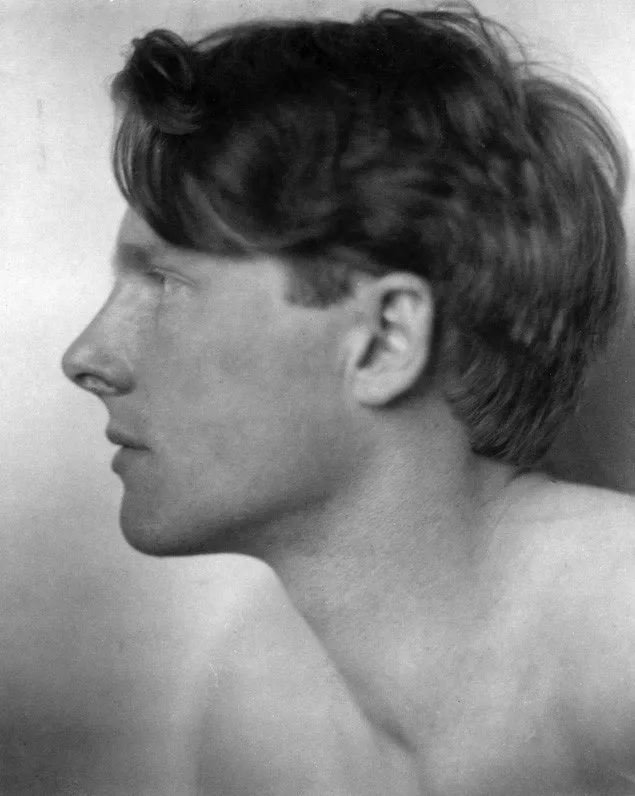
Rupert Brooke by Sherrill Schell, April 1913.
I have been so great a lover: filled my days
So proudly with the splendour of Love's praise,
The pain, the calm, and the astonishment,
Desire illimitable, and still content,
And all dear names men use, to cheat despair,
For the perplexed and viewless streams that bear
Our hearts at random down the dark of life....

These I have loved:
		White plates and cups, clean-gleaming,
Ringed with blue lines; and feathery, faery dust;
Wet roofs, beneath the lamp-light; the strong crust
Of friendly bread; and many-tasting food;...
Richard Rodgers and Oscar Hammerstein II (lyricist) must have found inspiration in Rupert Brooke for their 1959 song “My Favorite Things” from “The Sound of Music.”
READ: The Great Lover by Rupert Brooke on Poets.Org
READ: A short biography and selected works on PoetryFoundation.Org
Two. Vuko Tashkovich, Architect, Designer, Builder
I was offered the opportunity to develop a catalog of projects designed and executed by Architect Vuko Tashkovich. Working closely with his widow, Stefanie Tashkovich, I discovered a world of beautiful modern homes designed and built by a man whose vision for living focused on secluded locations and structures that reflected the clean, white lines, arches, and domes inspired by Byzantine and Greek styles of vernacular architecture. Vuko Tashkovich (1938-1996) left a legacy of 57 built projects, mainly in Westchester County, New York.
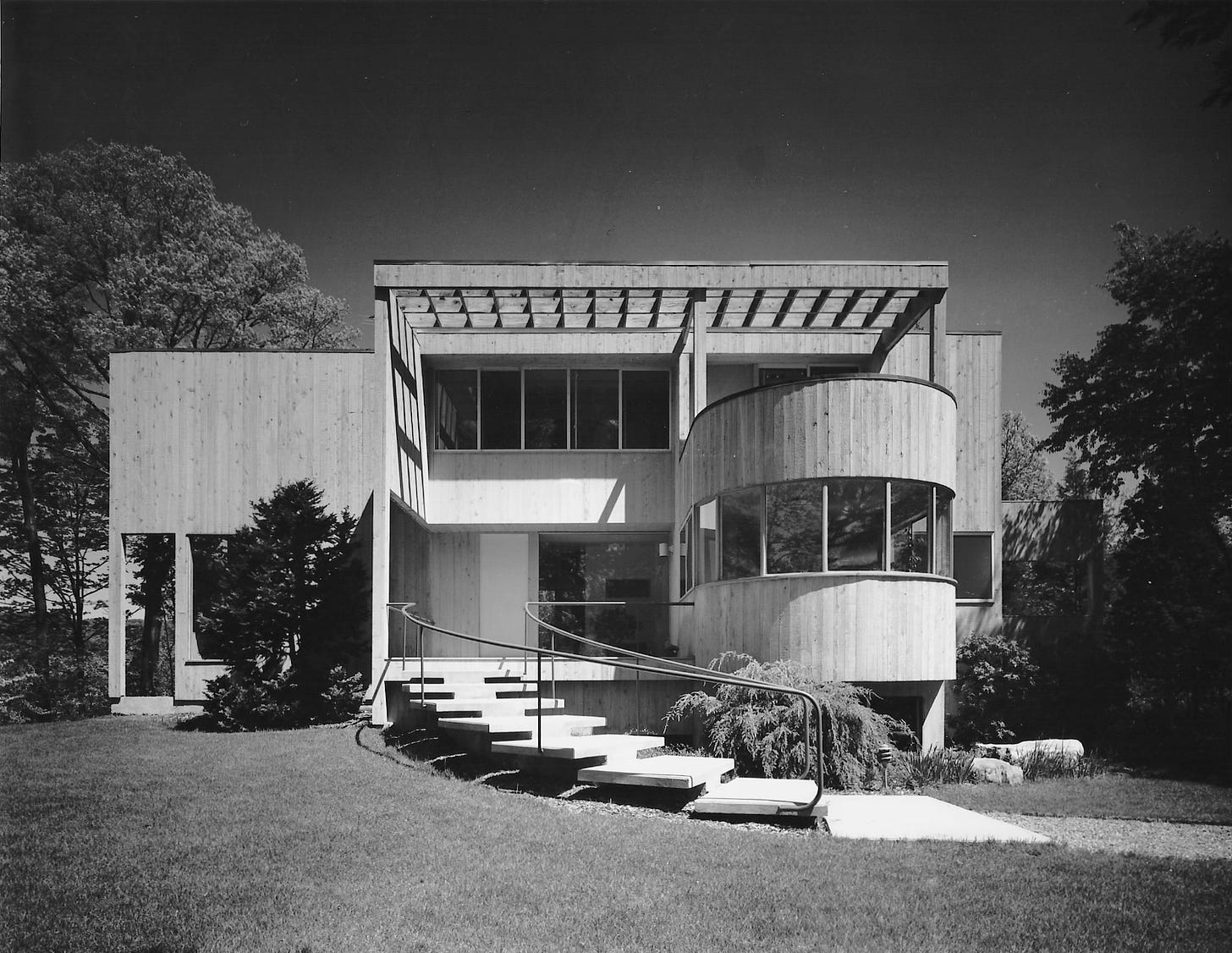
Daubek House by Vuko Tashkovich
WATCH: Modern in Pound Ridge on YouTube. 7 minutes 35 seconds.
Three. Profound Joy in Everyday Rituals
Taiwanese-born, American-educated artist Lee Mingwei had an exhibition at San Francisco’s DeYoung Museum in 2024. The exhibition offered a profound exploration of human connection, healing, and the transformative power of everyday acts. I could have easily overlooked it, and I have to thank Barbara W. for pointing me through the noren at the entrance to this meditative exhibition.
Mingwei transforms everyday actions like writing, sweeping, mending, or breathing into meaningful rituals. This transformation encourages us to find beauty and solace in small, often overlooked acts, creating spaces for social connection and emotional healing. His work engages strangers in intimate exchanges and serves as a conduit for human connection in an increasingly isolated world. One such experience is the Mending Project, where volunteers sit and repair torn clothing and fabric objects, fostering conversations and connections between the mender and visitor. This work was inspired by Mingwei’s experience on September 11, 2001. He kept busy mending clothes while waiting for news about his husband, who had gone to work that morning at New York’s Twin Towers. After a day of mending, his husband arrived home, covered in concrete dust but safe.
I visited Rituals of Care several times last summer. One day, while at the museum to see its annual Bouquets to Art exhibition, I found myself in the room adjacent to the Mending Project. Though pressed for time, I stuck my head through the noren and gasped to see Lee Mingwei sitting at the mending table. I bolstered my courage and walked over to introduce myself. Minutes later, we were engaged in meaningful conversation and lost in sharing stories about our lives. I took the black button-down shirt off my back and gave it to Mingwei to embellish with bits of colored fabric and thread. Chills still move through me as I think about his work and the afternoon we spent talking.
LEARN: More about Lee Mingwei on his website.
Four. San Francisco’s Japanese Tea Garden
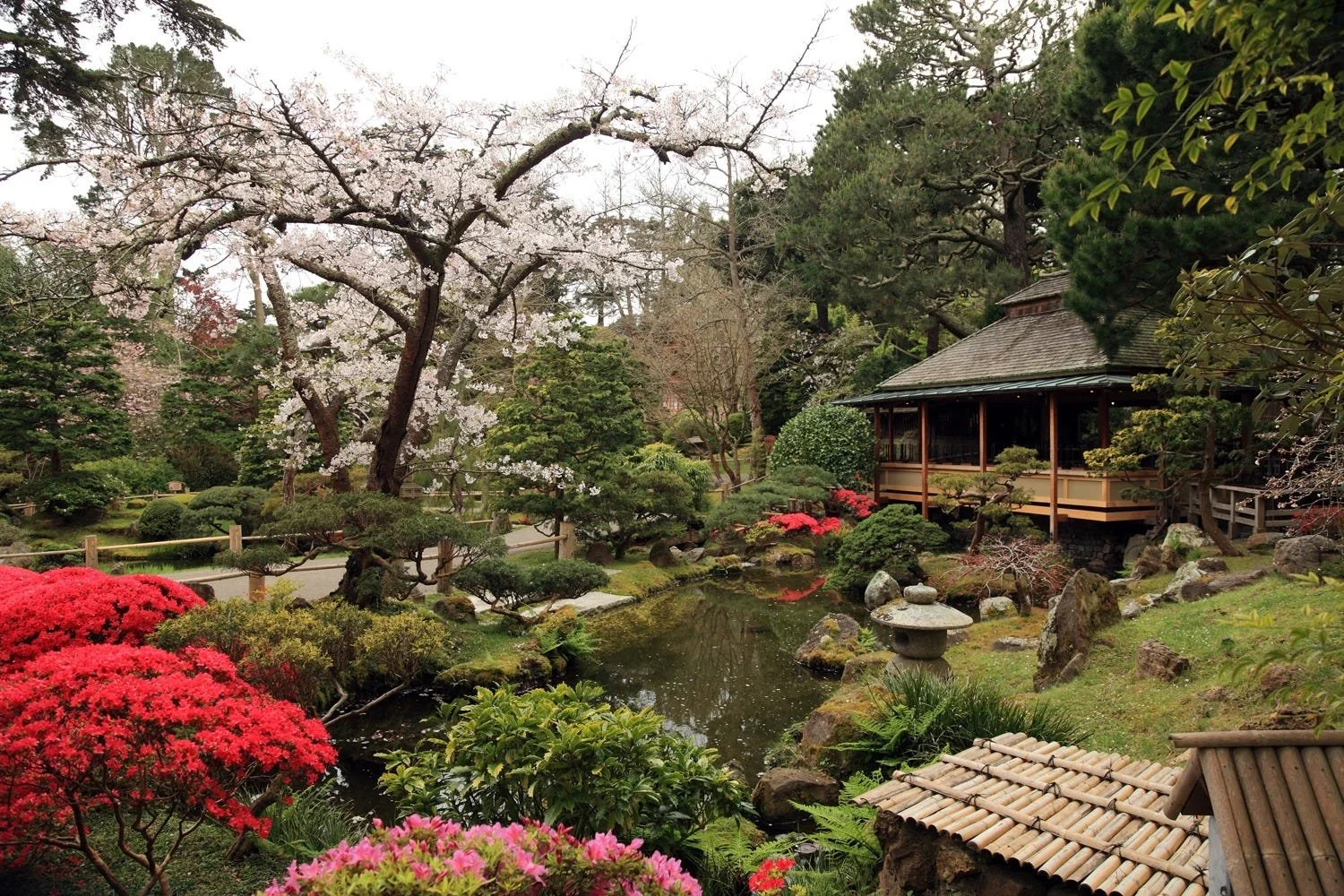
Tea House and moon viewing pooling at SF Japanese Tea Garden. Photo by Caroline Culler (Wikipedia:Wgreaves)
Short of a trip to Japan, San Francisco offers one of the most beautiful Japanese Tea Gardens. This garden is the oldest public Japanese garden in the United States. It began in 1894 as a “Japanese Village” exhibit for the California Midwinter International Exposition. The 1894 one-acre exhibit was designed to showcase Japanese culture and gardening skills to American visitors. After the fair ended, the beloved garden was saved and put into the hands of Japanese landscape architect Makoto Hagiwara. Hagiwara devoted his life to expanding and perfecting the garden, increasing its size to approximately five acres and importing plants, sculptures, and koi fish from Japan. Upon Hagiwara’s death in 1925, caretaking passed to his daughter, Takano Hagiwara, and her children, who tended the garden until the onset of World War II when the family was evicted from their home and sent to an internment camp. Makoto Hagiwara’s family was promised a 100-year lease on a home inside the gardens, but upon the family's internment, their home and many symbols of Japan, such as the Shinto Shrine, were destroyed.
Be sure to take the winding path from the Main Gate, over the Drum Bridge, around the main pond, by the Temple Gate, under the Pagoda, through Maple Lane, and by the great Buddha, arriving at the Tea House mentally prepared to enjoy your tea service.
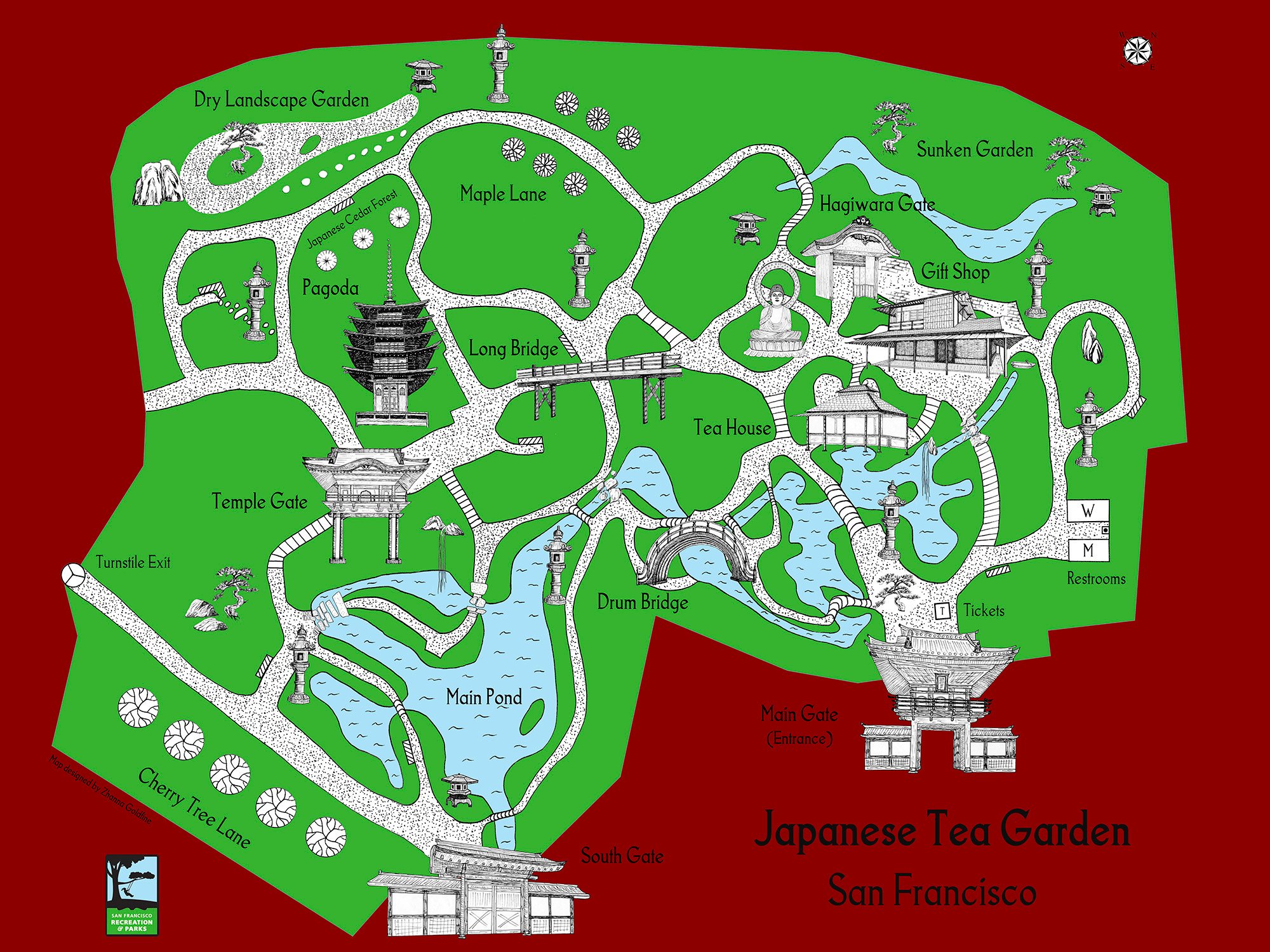
Be sure to take the winding path from the Main Gate, over the Drum Bridge, around the main pond, by the Temple Gate, under the Pagoda, through Maple Lane, and by the great Buddha, arriving at the Tea House mentally prepared to enjoy your tea service.
Despite the oppression and attempted erasure of the Hagiwara family from the Tea Gardens, their love and vision for the garden remain. Tea gardens are designed to isolate visitors from the outside world in an immersive and tranquil environment and then lead them slowly, usually by a meandering path, to the tea house. Crowded or empty, I find joy and solitude there. I take my thermos of tea to enjoy in a spot of my choosing.
VISIT: The Japanese Tea Garden in Golden Gate Park - Plan your visit
WATCH: Walk Through the Tea Gardens (4K) - YouTube (15 minutes 33 seconds)
READ: The Japanese Garden by Sophie Walker - Order through your local library
Five. Wolfgang Tillmans
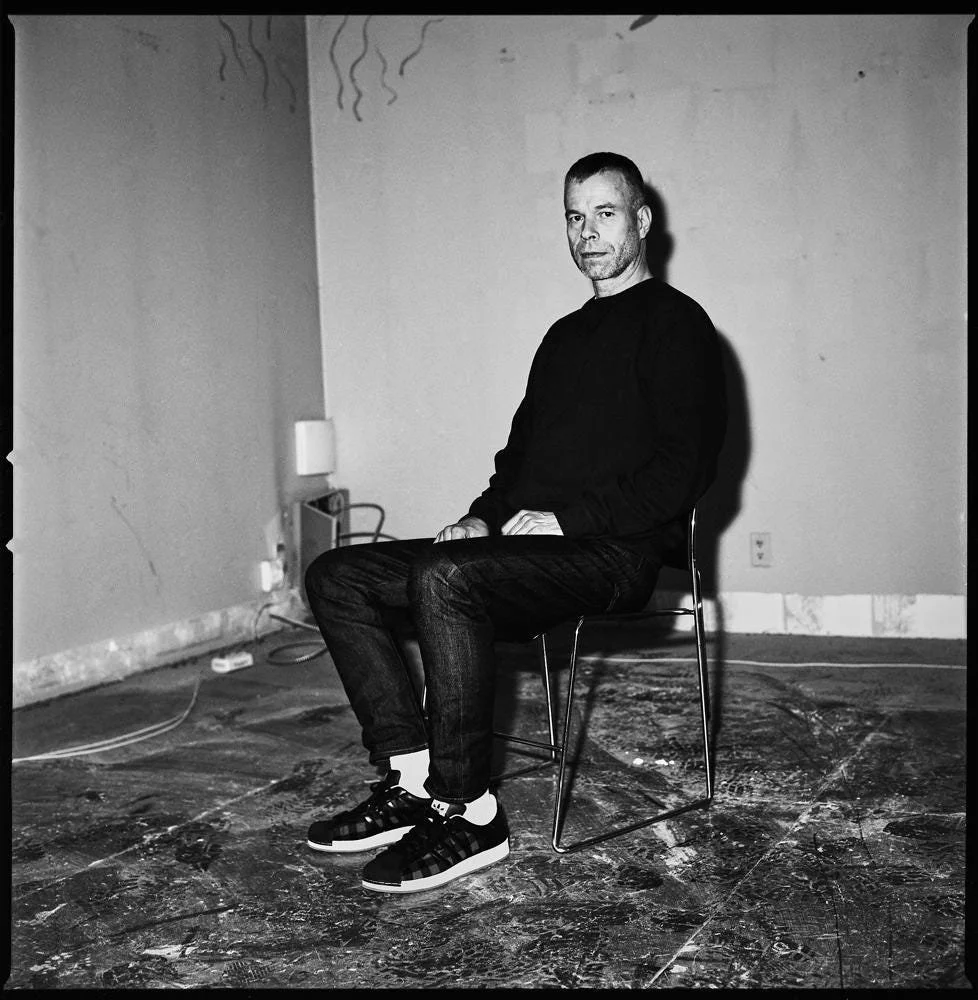
Wolfgang Tillmans by Luis Mora. Image from thump.vice.com.
“The viewer...should enter my work through their own eyes, and their own lives,” - Wolfgang Tillmans.
I discovered artist Wolfgang Tillmans while wandering SF-MOMA last winter and was stunned by his work. I spent so much time in the exhibition that it was the only exhibition I saw that day, which was just fine. Tillmans hangs his exhibitions in very unconventional ways. Some images are high above your head and out of the line of sight, some grouped, some alone, all without frames—just tape, thumbtacks, and perhaps some ticky-tack. The exhibition, “Look without Fear,” is a collection of still and moving images encouraging you to do just that.

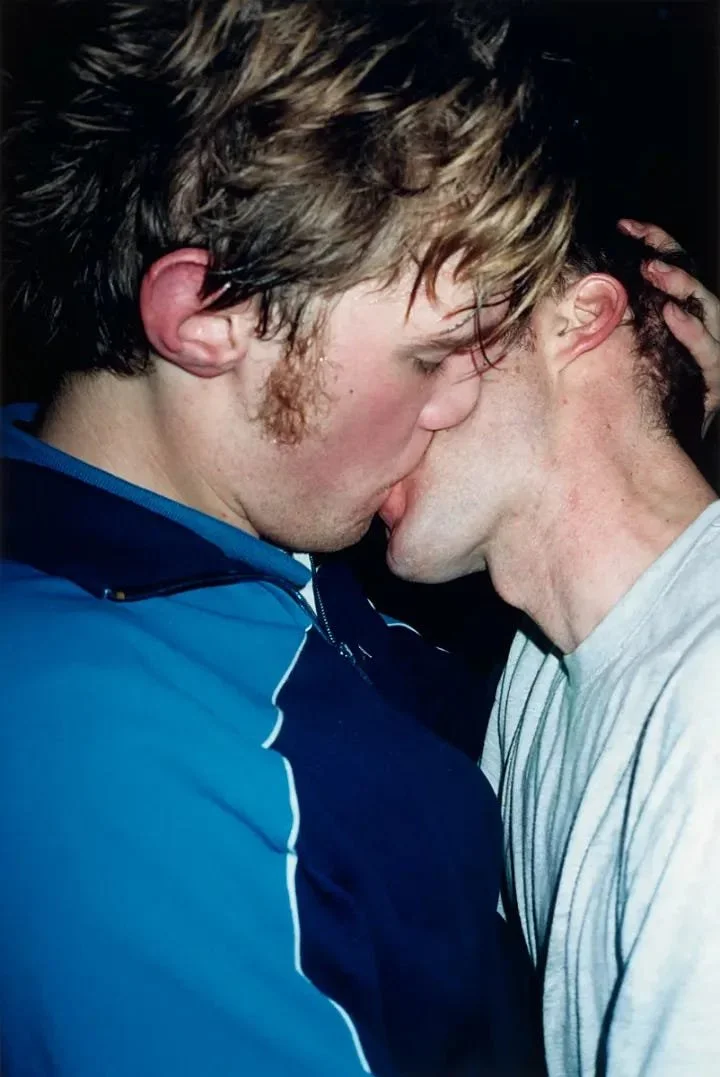
L: young man, Jeddah | R: The Cock (Kiss) 2002.
LOOK: Wolfgang Tillmans: To look without fear” Gallery walk at MOMA
LOOK: Wolfgang Tillmans’s website
Six. Elevenses and Afternoon Tea
As a Peace Corps Volunteer at the University of Malawi, Zomba, Malawi, I was introduced to daily tea traditions. I fell in love with these traditions because, at their heart, they are rituals of care. At the University, everything stopped for tea or coffee at 10 a.m. (Elevenses) and 3 p.m. The students gathered in the student common areas, and the faculty in the faculty common. Listening to the faculty over a “cuppa,” I learned much about Malawi's culture and politics. The tea and coffee we enjoyed were grown in Malawi and as fine as you could find anywhere.

Malawian women are enjoying afternoon tea from Malawi-made Dedza Pottery.
The persistence of afternoon tea in former British colonies is neither a simple holdover from oppression nor a neutral cultural practice. Its significance varies depending on context and perspective. While it undeniably has roots in colonialism, many communities have reclaimed and reshaped the tradition, infusing it with local flavors and customs. As such, daily tea in these regions often represents a complex interplay of colonial legacy, cultural adaptation, and evolving social norms.
When I returned to the States, I maintained the tradition. Managing biomedical research labs for several years after I returned, I instituted 10 a.m. and 3 p.m. breaks in our day, and even the most cantankerous of scientists soon fell under the spell of tea time. Due to the biohazard restrictions on food and drink inside the lab, we sat in the hallway or perched on doorsteps with our electric kettle, tea trays, and biscuits. This lack of comfort added to the bonding experience. Even today, I rarely miss a chance for afternoon tea.
READ: The tea-rific history of Victorian afternoon tea. The British Museum.
READ: English Tea Time for Dummies. National Public Radio.
READ: The Colonization of Tea. A two-part series at Loose Sips by Dain Evans
COOK: Go big with a Hobbit tea at 7 a.m., 9 a.m., 11 a.m., 1 p.m., 3 p.m., 6 p.m., and 8 p.m.
Seven. Song to the Siren by Tim Buckley

"Hearing the Song" was generated using DALL-E 2 by Kevin H. Souza in March 2024.
This image is in the Public Domain.
Years ago, I created a playlist of “Haunting Scores,” composed of selections from haunting movie scores. For me, a haunting score is not spooky; rather, it is emotionally chilling, in a “feel it in my bones”— sort of way. The playlist opens with Klaus Badelt’s Elysium and Now We Are Free from the movie Gladiator, sung by Lisa Gerrard. Other selections include Mad World by Michael Andrews, sung by Gary Jules, which haunts the final frames of Richard Kelly’s movie Donnie Darko. As we move through the 22-song playlist, we get to Song to the Siren, written by Tim Buckley and Larry Beckett. I first heard this song as the ending theme to Zack Snyder’s Justice League, sung by Rose Betts. The song haunted me - Betts’ voice, the lyrics, the quiet feeling it leaves you with at the end of a nerve-rattling movie. I learned that I was late to the Song to the Siren party. It is one of the most recorded songs in the Dream Pop genre. Artists ranging from Pat Boone to Robert Plant, Sinéad O’Connor, Bryan Ferry, George Michael, and its writer, Tim Buckley, have all recorded the song.
LISTEN: Song to the Siren sung by Rose Betts - YouTube 3:17 minutes
LISTEN: Song to the Siren sung by Tim Buckley - YouTube 3:29 minutes
LISTEN: Song to the Siren sung by Robert Plant - YouTube 5:51 minutes
LISTEN: Song to the Siren sung by George Michael - YouTube 3:33 minutes
LISTEN: Elysium sung by Lisa Gerrard - YouTube 2:41 minutes
LISTEN: Now We Are Free sung by Lisa Gerrard - YouTube 7:19 minutes